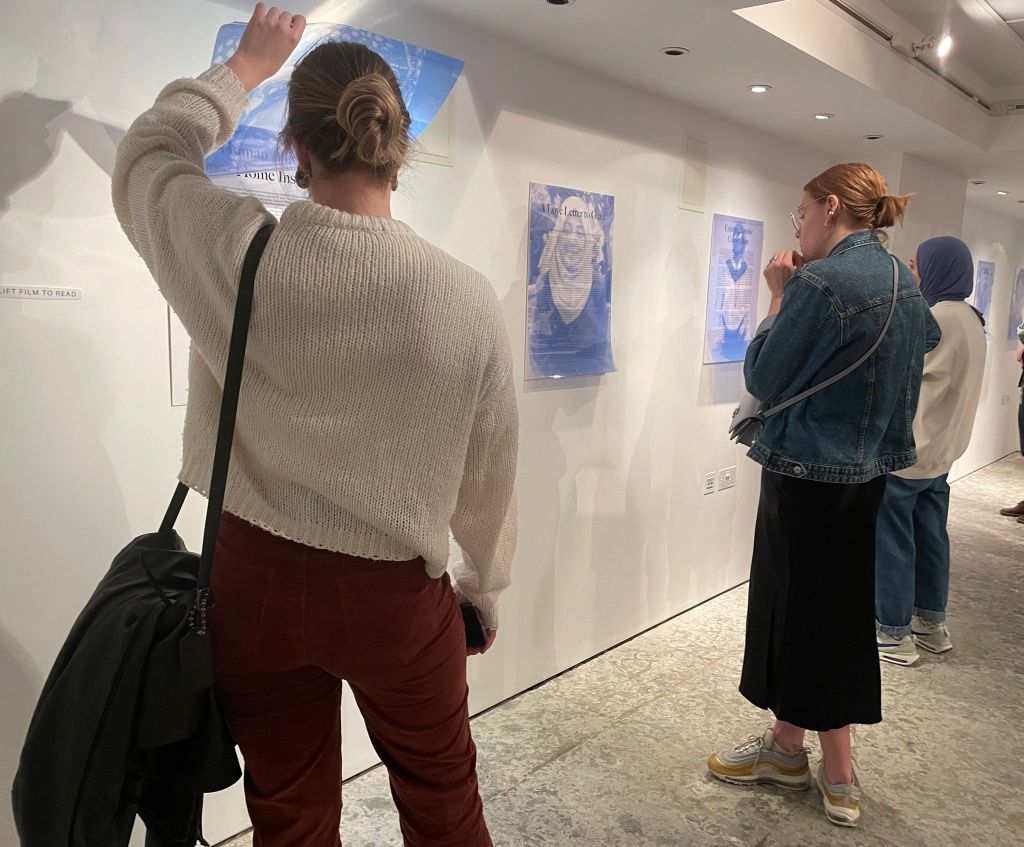
The ‘We Are Not Numbers’ (WANN) exhibition brings the stories of ordinary Palestinians to Londoners. The exhibition at P21, which consists of personal essays, poems, a timeline of Palestinian history, photography, drawings, paintings and more, is an homage to the power of the written word.
The personal nature of the essays, which are the main feature of the exhibition, draws the readers close to the writers. The personal essays are like diary entries because of the detail of the daily lives of Palestinians which they enclose. Some of the most touching examples include a writer’s search for paints in Gaza, which ended in her using makeup as a substitute; the experience of being an amateur photographer trying to find a camera (the story of how Moataz Azaiza started as a photojournalist in 2018), the life of a child who dreams of becoming a chef and happens to have leukemia. The struggles of following one’s dreams, passions and hobbies; these are the everyday experiences that envelopes readers into the stories.
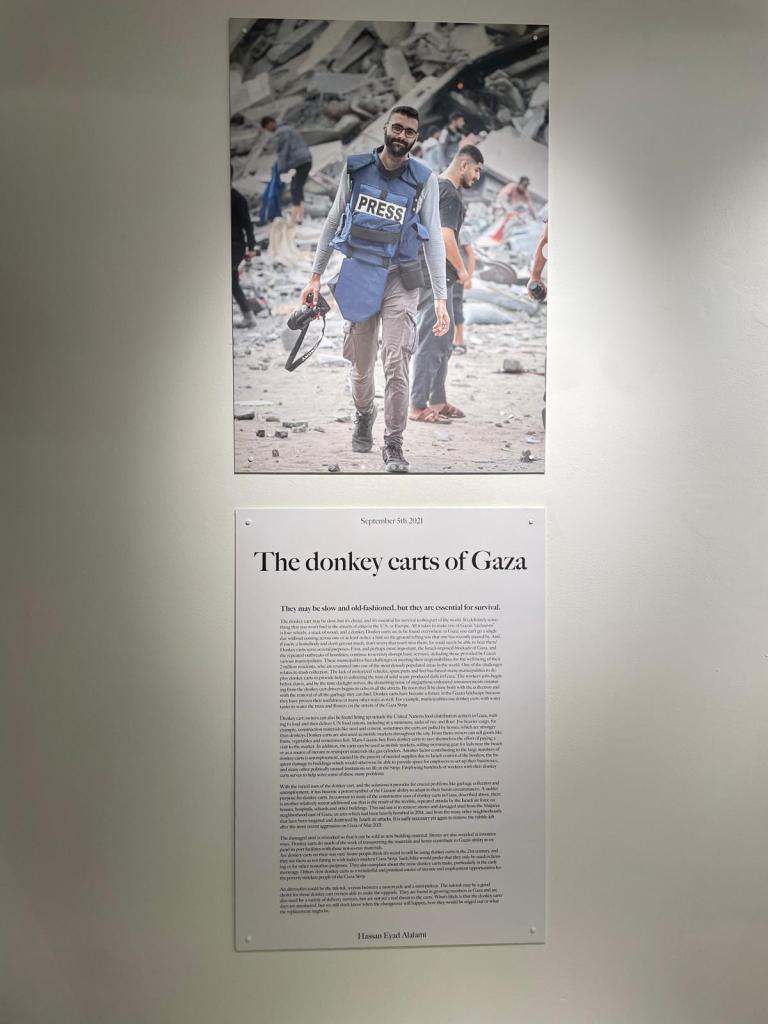
The fact that the exhibition is split between two floors, where the personal essays on the main floor are all written before 2023, highlights the relatability of these stories containing the intricacies of daily life in a big city as opposed to focusing solely on living through what the ICJ has deemed ‘a plausible genocide’. This structure where essays are split between two floors, almost creates an experience of ‘before’ and ‘after’ the genocide began in Gaza. It makes the experiences of Palestinians relatable as opposed to the news and social media posts which are created to shock or inform but not form a connection with viewers.
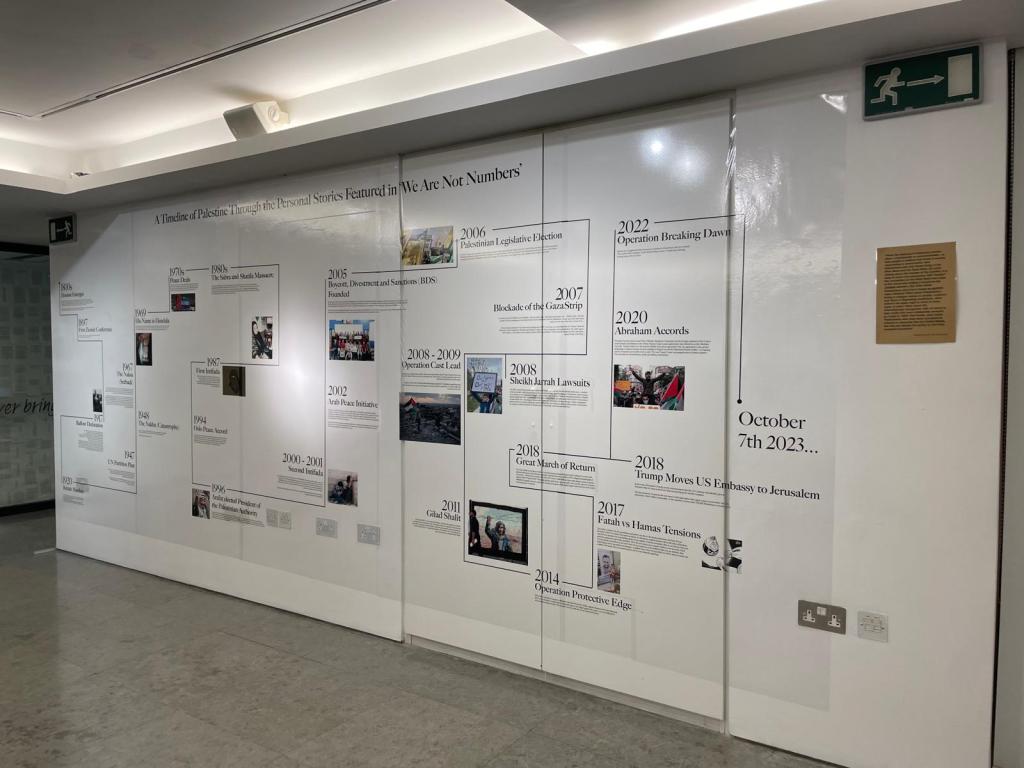
The placement of the essays around the gallery as the centrefold of the exhibition is an ode to the beauty of writing. But the highlight of the exhibition is the map which provides a brief history of events in Palestine from the 1800s to present day, accompanied by quotes from essays by WANN writers. While many people are determined to take sides in the Israel-Palestine conflict based on personal allegiances, the timeline presents the history of Palestine in a very clear and moving way, which is easily accessible for the reader. Each event is brought to life by moving excerpts from a handful of various personal essays, of which there are a total of over 1,300 written by 350 writers since WANN began in 2014.
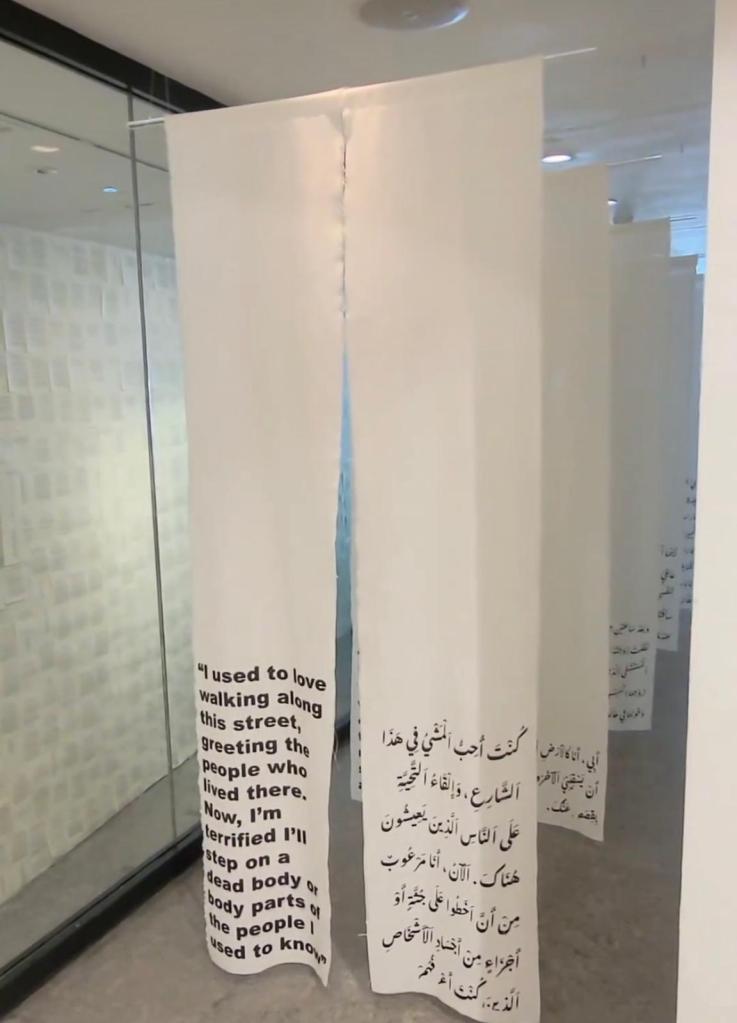
The use of several different mediums immersed with writing such as essays, poems and shrouds with quotes from writers, showed many ways that words can illuminate the experiences of Palestinians who are often separated by English-speaking populations by barriers such as language, culture, and news channels which have been found to be ill-equipped to represent their truth. Walking through white shroud-like curtains covered with quotes offered a multi-sensory experience into being in an unexpected state, enclosed from the world.
The stories don’t just inform readers, they give writers a bridge to others outside of the region and a hope for a future; some of the writers of the pieces have gone on to have their pieces published in mainstream media with the mentorship of 150 external writers. At the WANN writer’s workshop, mentors talked about how they found hope speaking to those in Gaza amidst the horrifying news emerging from the region as the onslaught of the Israeli bombardment continues on a daily basis.
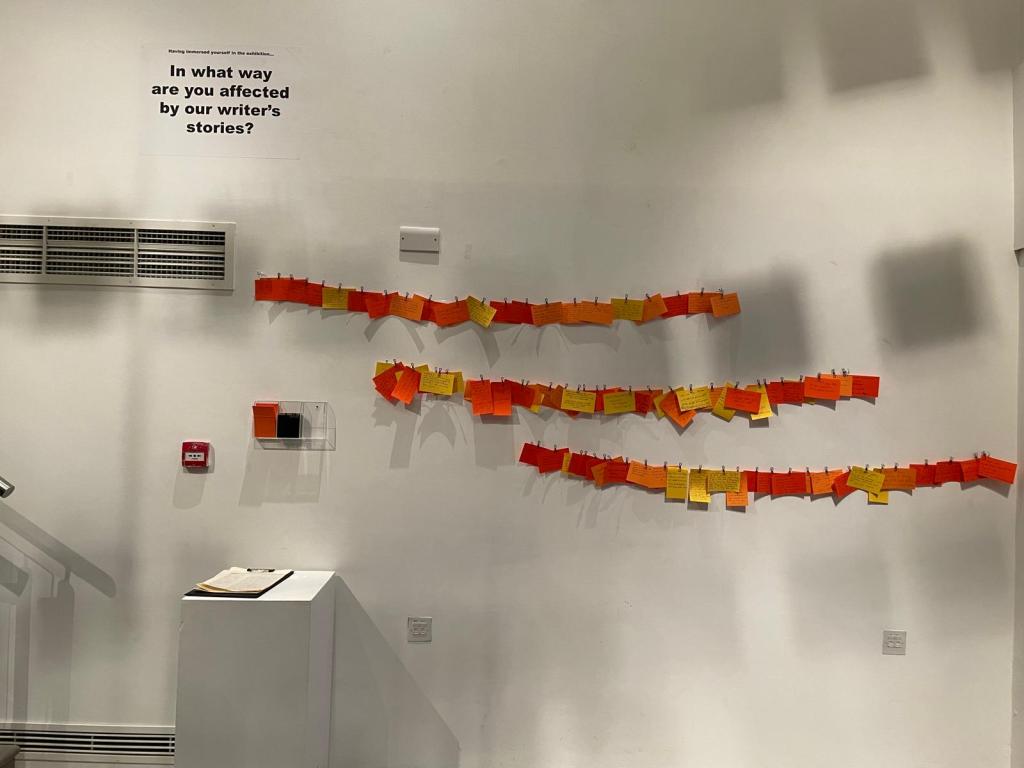
The writing featured in the exhibition conveys their mission according to the WANN website, “We Are Not Numbers (WANN) is a youth-led Palestinian nonprofit project in the Gaza Strip. It tells the stories behind the numbers of Palestinians in the news and advocates for their human rights.” Each story is like entering a conversation with a WANN writer, as they tell you about the details of their daily lives, touched by injustice, in a situation that they never chose.
 THE FULL STORY
Leave a comment